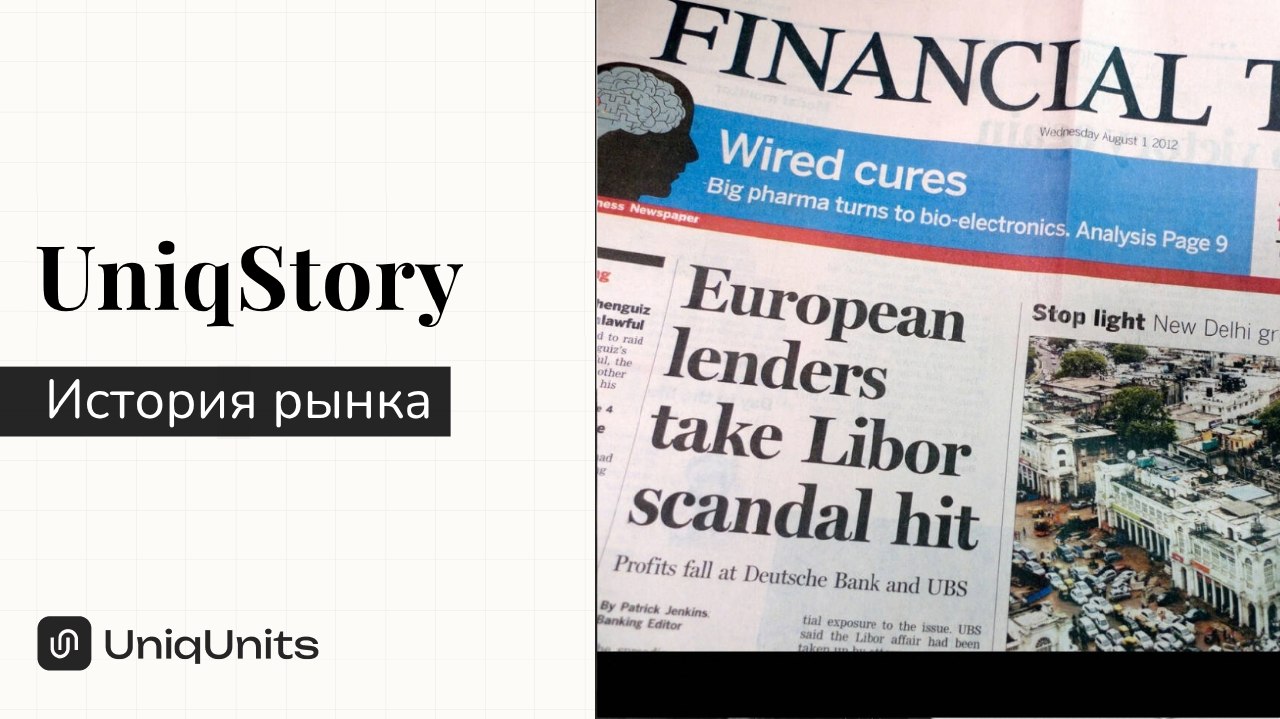
What if the world's main interest rate, which $350 trillion rested on, was for years simply pulled out of thin air?
The mechanics worked like this: every morning 16–18 of the largest banks submitted their estimate of the rate at which they could borrow money from other banks. The highest quarter and the lowest quarter of the figures were thrown out, and the average was calculated from the rest. That average became LIBOR, the rate that mortgages, loans and derivatives around the world depended on.
The problem was that the figures were a bank's subjective "self-assessment" that nobody checked against real trades. Traders who needed the rate a bit higher or lower for their positions simply messaged the colleagues responsible for the submissions.
The chats that regulators later published show how routine it all was: one trader thanks a colleague with something like "I owe you a bottle of champagne" for nudging the rate slightly in his favor on the day he needed it.
When the conspiracy came to light, regulators fined the banks $9 billion, and trader Tom Hayes, who became the face of the scandal, was sentenced in 2015 to 14 years in prison (later reduced to 11, of which he served 5.5 years).
❌The LIBOR era is now over for good, and the financial world has fully moved to overnight risk-free rates (Risk-Free Rates, RFR) tied to specific national currencies.
❗️This story proves that you can't trust subjective reports and "made-up" quotes. The market only recognizes transparent data and real volumes.
Track the data flow and real-time liquidity reaction through our app: